






Artist Spotlight: Elena Zolotnitsky
Featuring portraits, floral works, and selections from her Extinct series
September 3 2026


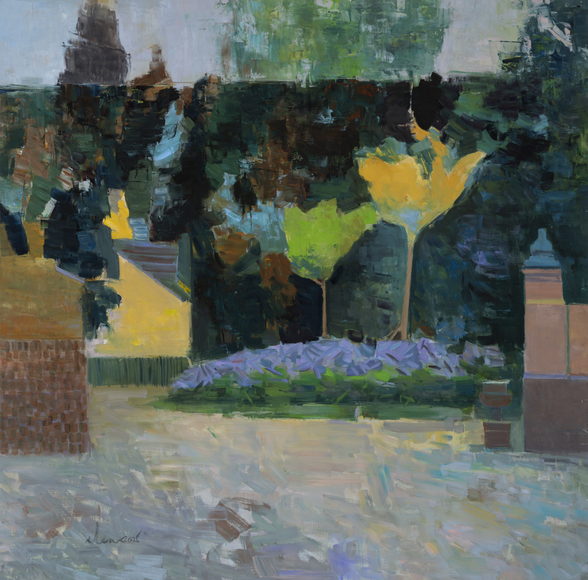
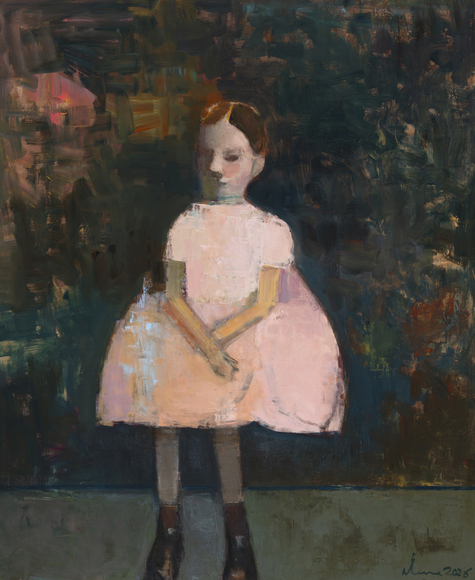
Elena Zolotnitsky’s paintings move between chairs, flowers, and portraits, with each subject offering a distinct way into color, memory, emotion, and the act of painting itself. Familiar forms remain present but are rarely fixed. Faces emerge through gesture and surface, flowers shift between description and sensation, and chairs take on the presence of characters. For Zolotnitsky, these subjects are starting points rather than destinations — structures through which a painting can become more intuitive, open, and alive.
In her ongoing Extinct series, the chair becomes a way of exploring presence through absence. Zolotnitsky describes the series as carrying “a sensation of something having passed” — a person, a moment, a memory, or a feeling. Yet the work is ultimately about painting rather than the object itself. Across Extinct, her portraits, and her flowers, color, gesture, surface, and open space allow recognizable forms to shift between clarity and ambiguity. “I like to think that there is no object,” she says. “That it is all an emotion.”
Zolotnitsky compares her recurring subjects to the structure of a sonnet, where repetition creates the freedom to continually discover something new. At the center of her practice is what she calls the “mystery of familiar” — the thrill of finding something unexpected within something known. Trained in the classical tradition of fine art, she has spent much of her life pushing against prescribed ways of making an image in pursuit of greater freedom. Across nearly four decades of painting, her underlying question remains the same: how to make a painting feel alive and “vibrate with mystery.”
Half & Half
Oil on Mylar on Panel
24 x 28 in.
In Pink
Oil on mylar mounted on panel, framed
16h x 16w in
Shimmering Love
Oil on mylar mounted on panel, framed
32h x 28w in
Transparent (Extinct Series)
Oil on Vinyl
24 x 24
Colors of the Fall
Oil on Panel
14h x 12.5w in.
Disappearing Act (Extinct Series)
Oil on Mylar on Panel
6 x 6 in.
Lavender Dreams
Oil on paper mounted on panel
32.5h x 33w in
Metamorphosis 5 (Extinct Series)
Oil on Mylar on Panel
6 x 6 in.
Song Of The Lark
Oil on paper mounted on panel, framed
20h x 20w in
Metamorphosis 3 (Extinct Series)
Oil on Mylar on Panel
6 x 6 in.
Green M.Z (Extinct Series)
Oil on Mylar on Panel
14 x 14 in.
Middlesex (Revisited)
Oil on Paper Mounted on Panel
18h x 18w in.
Here & Now (Extinct Series)
Oil on Mylar on Panel
14 x 14 in.
Shift (Extinct Series)
Oil on Mylar on Panel
12 x 12 in.
Ghost of Orquevaux
Oil on Mylar Mounted on Panel
14.625h x 14.625w (framed size - 16x16)
Mondrian-ish (Extinct Series)
Oil on Mylar on Panel
16 x 16 in.
Three Horizons (Extinct Series)
Oil on Mylar on Panel
12 x 12 in.
Young Bride of Orquevaux
Oil on mylar mounted on panel, framed
14.75h x 14.75w in
American Rust (Extinct Series)
Oil on Mylar on Panel
12 x 12 in.
Pretty Pink (Extinct Series)
Oil on Mylar on Panel
12 x 12 in.
Small Yellow
Oil on Mylar Mounted on Panel
12h x 12w in.
Half Moon
Oil on Panel
25.5h x 25.5w in.
Over Her Shoulder
Oil on mylar mounted on panel framed
14h x 14w in
La Petite Choupette
Oil on paper mounted on panel, framed
29h x 25w in
Untitled Blue
Oil on mylar mounted on panel, framed
13h x 13w in
Dreaming In Sephia
Oil on Paper Mounted on Panel framed
16h x 16w in.
Phantom Flowers
Oil on Mylar Mounted on Panel
15h x 15w in.
Light & Shadow
Oil on Paper Mounted on Panel
16.5h x 16.5w in.
Inspired
Oil on Mylar Mounted on Panel
16h x 16w in.
Darker
Oil on Paper Mounted on Panel
16.75h x 16.75w in.
Capricho #1
Oil & Goldleaf on Mylar, Mounted to panel
12h x 12w in
Lancelot - Extinct Series
Oil on mylar
10h x 10w in
No Title
Oil on Paper Mounted on Panel
24h x 24w in.
Summertime/The Grid
Oil & Masking Tape on Mylar on Panel
26.5h x 25.5w in.
Twisted
Oil on Mylar Mounted on Panel
18h x 16w in.
Solo - Extinct Series
Oil on Panel
11.5 x 11.5 in.
Queen Of Hearts
Oil on Mylar Mounted on Panel
18h x 18w in.
Emerald Magic
Oil on Paper Mounted on Panel
16.25h x 16.25w in.
Muddy Waters - Extinct Series
Oil on Mylar Mounted on Panel
15.5h x 14w in.
Mon Petit Chou
Oil on Mylar Mounted on Panel
12.25h x11w in.
SOLD
Love Letter to Vermeer
oil & gold leaf on mylar mounted on panel
14.75 x 14.25
SOLD
White Princess
Oil on Mylar Mounted on Panel
18h x18w in.
SOLD
Obscura
Oil on paper mounted on panel, framed
24h x 24w in.
SOLD
Pink Valentines
Oil on Paper Mounted on Panel
26h x 23.5w in.
SOLD
Velasqueza
Oil & Gold Leaf on Paper Mounted on Panel
12.5h x 12.5w in.
SOLD
Pearl Necklace
Oil on Paper Mounted on Panel
24h x 24w in.
SOLD
Blue Is The Night
Oil on Paper
19.5h x 18.25w in. (framed size - 25 x 24)
SOLD
Emergence
Oil on Paper Mounted on Panel
17.5h x 15.5w in.
SOLD
Le Roi Bleu - Extinct Series
Oil & Gold Leaf on Mylar Mounted on Panel
20h x 20w in.
SOLD
Goldfinch
Oil on Goldleaf Mounted on Mylar and Framed
13h x 13w in. (framed size - 17h x 17w)
SOLD
Elena Zolotnitsky in the gallery.
Photography by: Emily Followill


